Read the full article here
Timid: What were some of the biggest creative challenges or discoveries you encountered while making Dear Stranger, and how did those moments shape the final film?
Mariko: Actually, everyone had different language backgrounds, whether the creators or the actors, so the most important issue was mutual understanding and communication.
Gwei: The language barrier was a problem because the director spoke to me in Japanese. It had to be translated so I could understand, but sometimes the translation would lose some of the nuances, the subtle details of what he originally said. So I had to keep my eyes wide open, watching to see if the director had other intentions behind his words.
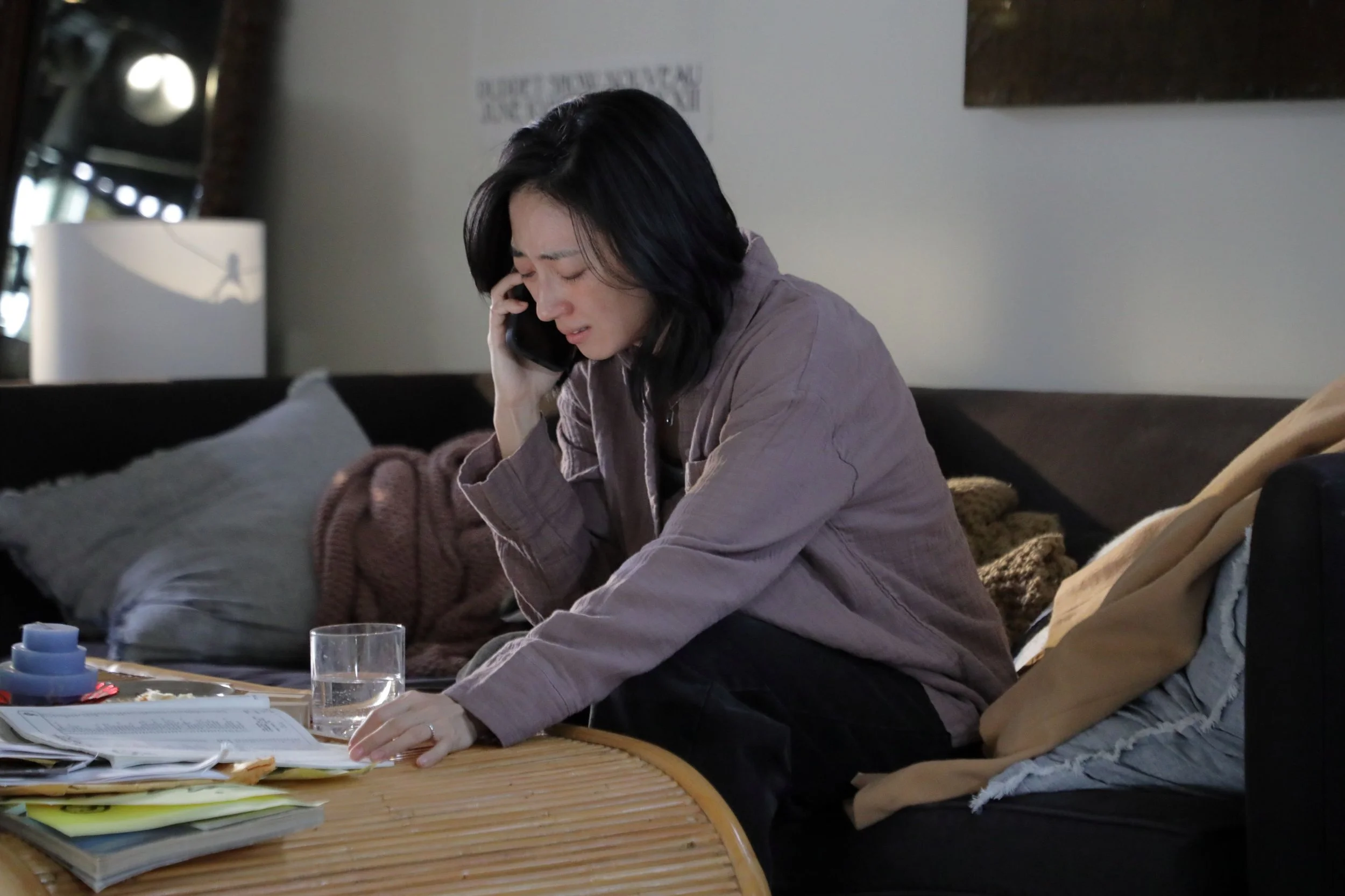
Timid: Jane, the central character, balances family responsibilities with personal dreams while facing contradictions from her past and present. How did you connect with her struggles, and how did direction and performance come together to portray them? For example, the scene with the puppet doll is particularly moving. What did it mean to each of you in terms of character, story, and symbolism?
Gwei: In my own life, I often feel there are many things I want to say, but in certain situations, I may not say them, maybe because my personality is afraid of conflict. Jane, as an immigrant, also faces being misunderstood, so she too can’t easily say everything aloud. But because she’s a puppeteer, I feel the puppet is another soul of hers. She uses puppetry to express all the words she cannot say. I remember one day during a shooting break, I went to the supermarket, and I really, really wanted to see a puppet show. But it was a Monday, so there were no shows at all. Later when I shared this with my friends, they said it felt like I had truly become Jane in that moment, as if in my life I also needed this passion to support me. It was like being a plant without water; without puppetry, I would wither.